Minister goes nuts for Malawi
As an OurCoop Member, it was meeting the people who grow and process the nuts and tea, who make it all happen!
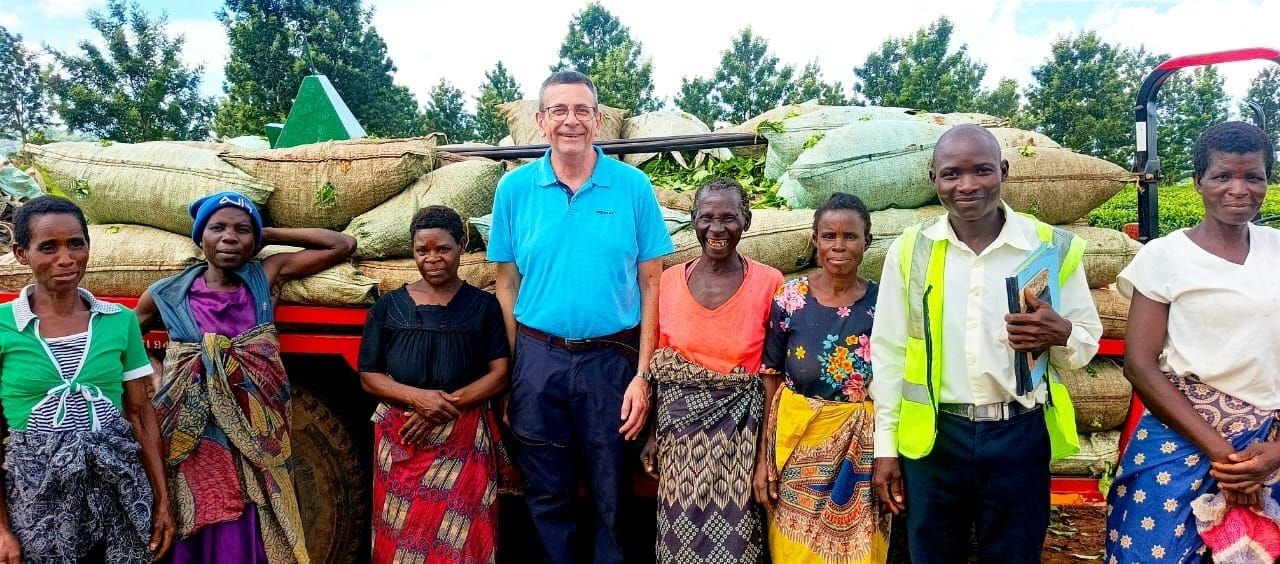
This year we suppoted an OurCoop Member who wanted to visit our work in Malawi. Kevin Price, a Baptist Minister from Derbyshire, shares his experience with us for Co-op Fortnight. Here's his story.
When I went along to a Fairtrade wine tasting event in Wirksworth, Derbyshire in October 2025, I never imagined it would lead to a trip to Malawi. I got chatting with a colleague from Central Co-op, which had provided the Fairtrade wines for tasting, and she told me about their Malawi Partnership supporting cooperatives in this southern African country, producing tea, coffee, macadamia nuts and spices, including some that are Fairtrade accredited and sold in our local Wirksworth Co-op.
I was due to take some sabbatical leave from my ministry at Wellspring Church, so decided to spend some of this time during April in Malawi, exploring the impact of an international cooperative trading network on the ground. Dr Sarah Alldred (Lead: Fund for International Cooperative Development) introduced me to the Malawi Federation of Cooperatives (MAFECO) and project manager Jeruzye Munthali who organised a tour starting with the Highlands Macadamia Cooperative Union (HIMACUL) centred around Ntchisi about 50 km north of the capital Lilongwe.
In common with many food products on our supermarket shelves, we might have little idea how macadamia nuts grow and are processed. Like chestnuts, they grow in clusters and sit in a fleshy green husk with each small nut enclosed in a thin hard brown casing – a bit like conkers.
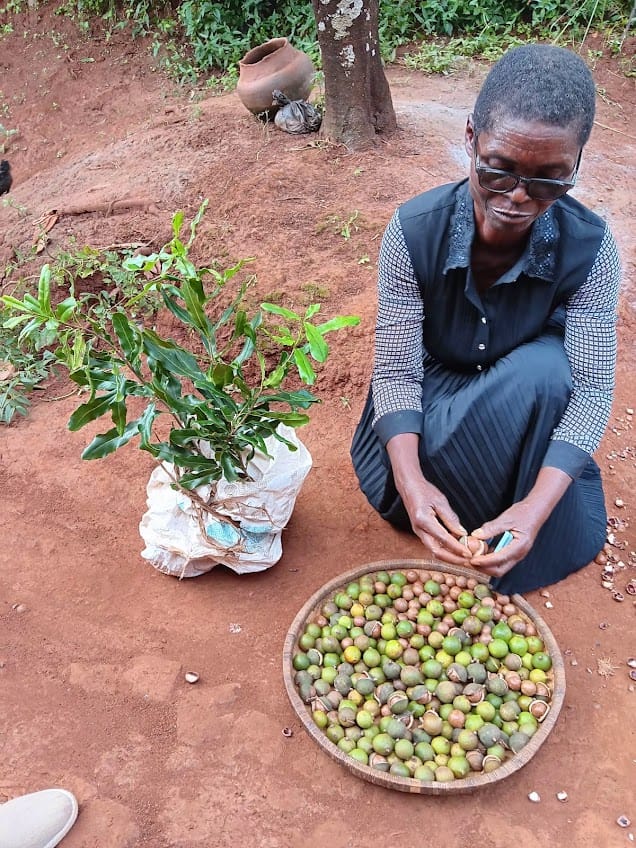
In April / May (Malawi’s autumn) they fall to the ground and split open revealing the ‘conkers’. The nuts are then gathered by hand, dried and cracked, in a labour-intensive process.
I met several farmers, mostly women, and small landowners who had joined with others to form a primary co-op. Rosemary, a leading light, has sixty trees on her few hectares of land, spaced out and growing alongside other crops such as maize and soya beans. Her trees are individually hand-watered with water carried from the nearest borehole supply. It is a very sustainable operation with organic waste, such as husks and shells, used as fertiliser.
With some sixty farmers in this co-op the obvious benefit of ‘strength through association’ can be seen, and is particularly evident in their warehouse, built on land purchased with the ‘Fairtrade Premium’ (a percentage of product sales paid back to suppliers for community enhancement). Here, nuts are gathered, dried and cracked, ready to be bagged for shipping.
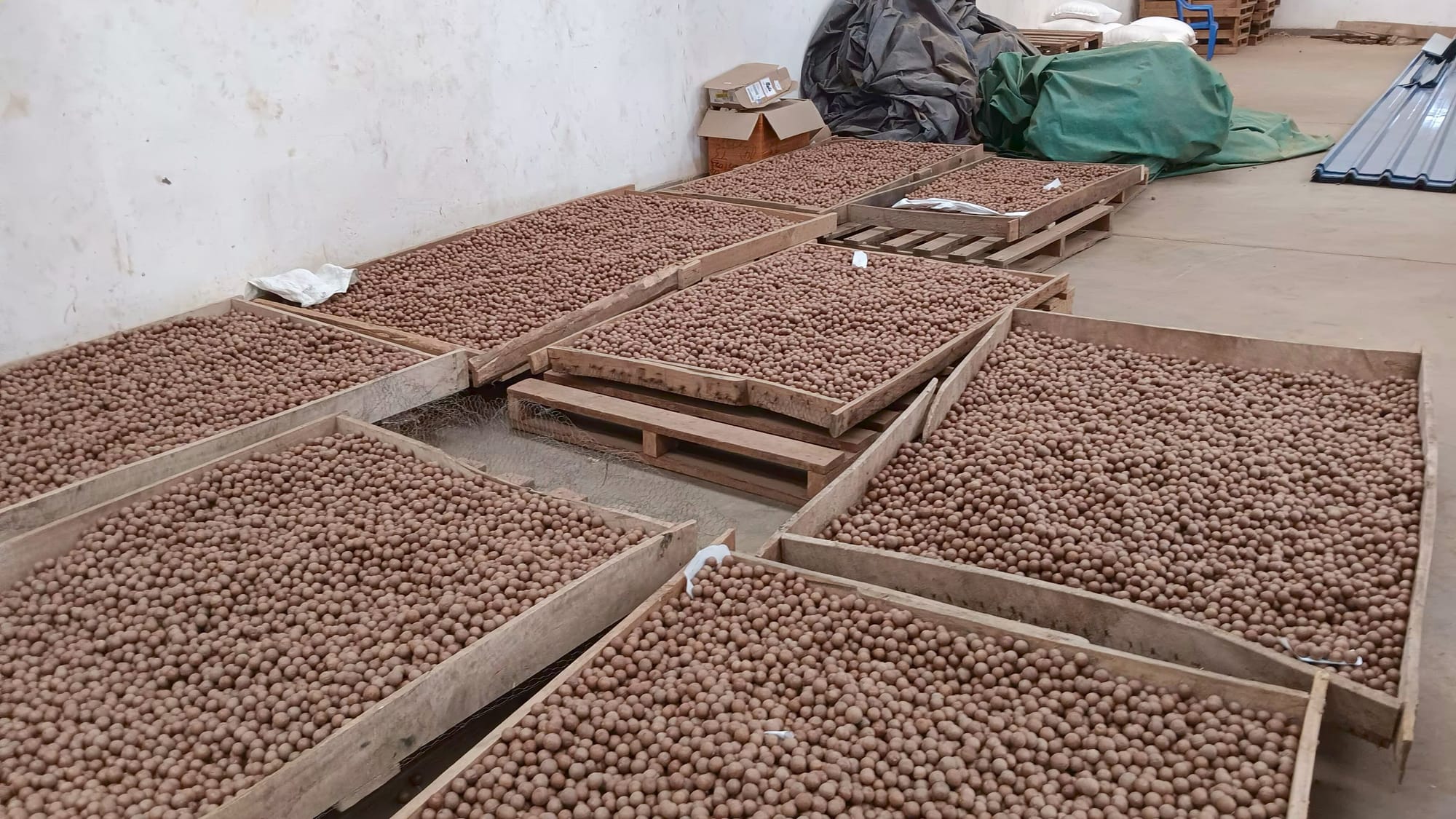
The warehouse was a source of pride, and this too was being run on eco-principles with solar powered electrical systems including climate control, essential to drying the nuts efficiently.
All in all, an eye-opening experience – but the widest eyes were those of the farmers who couldn’t believe how much a small bag of macadamia nuts sells for in the UK!
Then it was time for tea…
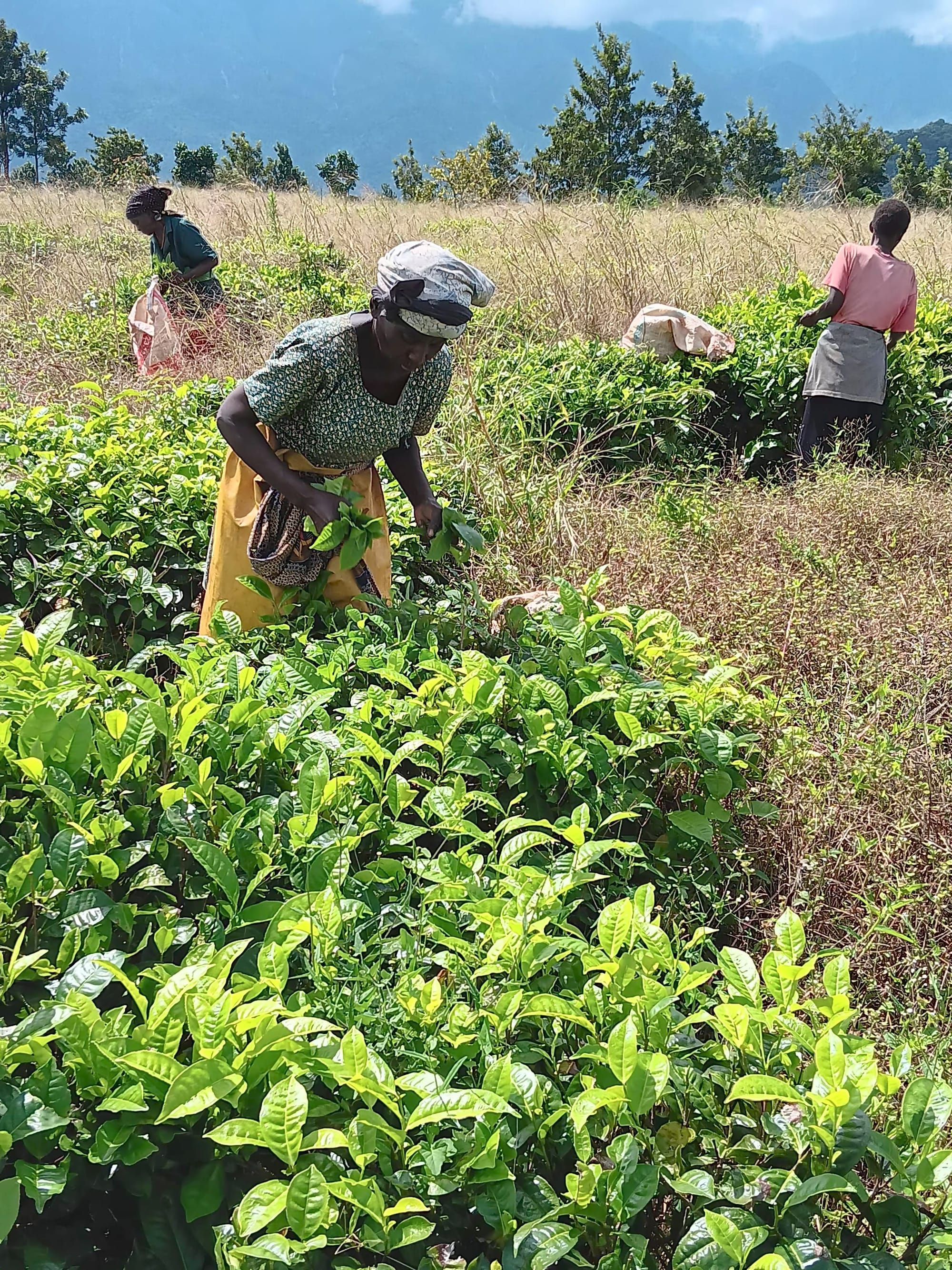
So, we drove 300 km south to Mulanje to visit some co-ops growing tea – particularly appealing to me as a big tea drinker!
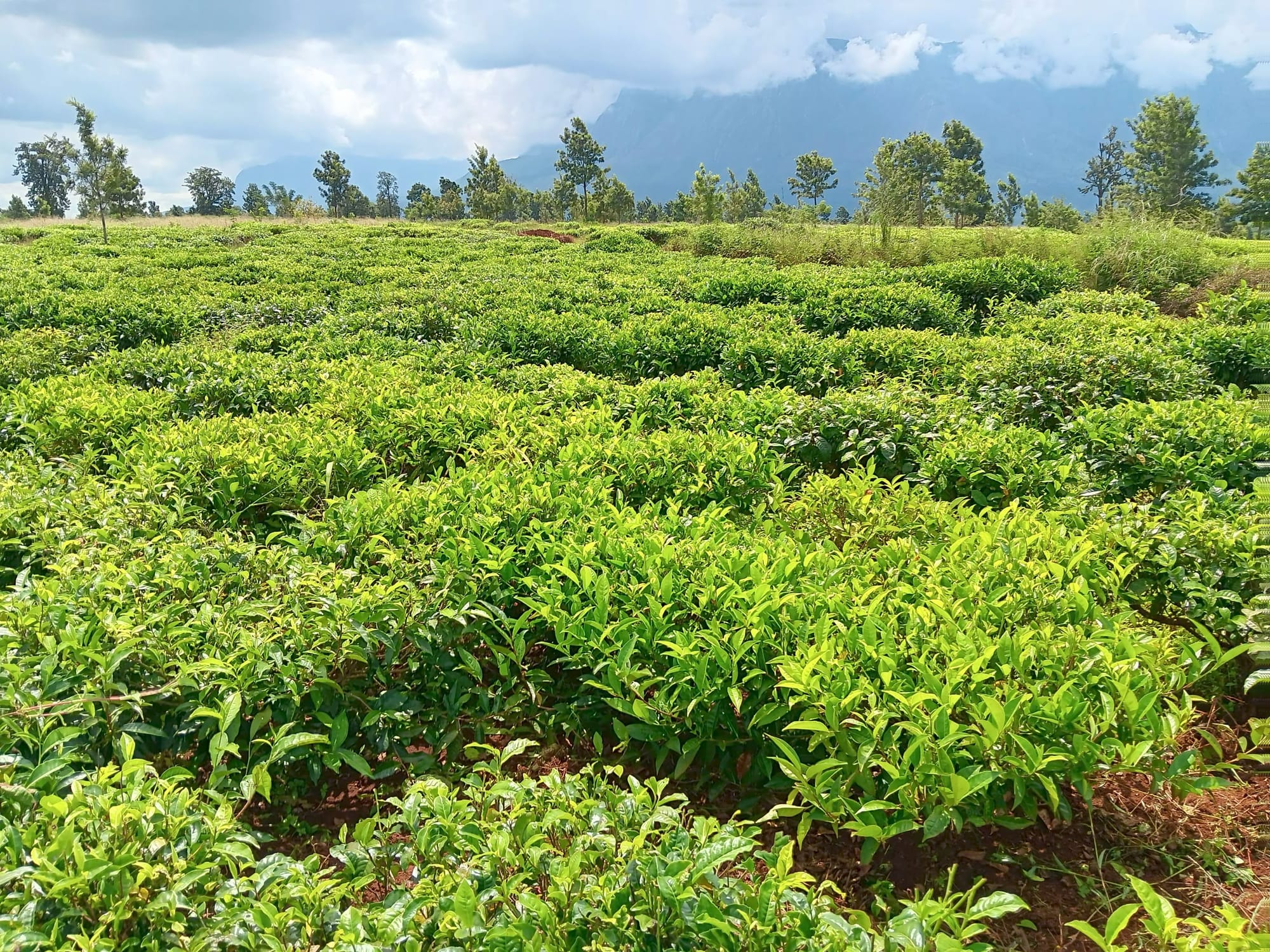
The local climate made this area ideal for tea-growing when first introduced by British settlers in Victorian times, but climate change has brought challenges with water shortages, mosquito and termite infestations.
(photo 5) The tea-pickers I met are paid at the rate of about 20p per kg and can gather something like 50kg over four hours. For the farmers, half of their costs are absorbed by fertilisers, now more expensive due to the international situation. This co-op’s ambition is to buy their own tea-processing plant to add value to their tea and give them more options for selling it on.
My ten-day visit with MAFECO provided only a snapshot of their work with suppliers of two products, but demonstrated the commitment of this apex organisation to encourage the implementation of cooperative principles in a developing country providing greater access to markets and associated community benefits. There are many more products offered from staples such as rice and coffee to gold…
But above all, as an OurCoop Member, it was meeting the people who grow and process the nuts and tea, together with the enthusiastic staff of MAFECO who make it all happen in a cooperative context, thereby making a difference in the lives of so many people, that I will fondly remember.
Takulandirani Malawi – The warm heart of Africa!